

Enlarged Uterus and Fibroids: Understanding the Connection

Learning that you may have an enlarged uterus can feel confusing and overwhelming. You may notice changes in your body and experience symptoms that take away from your daily routine. It is normal to wonder what is happening inside your body.
An enlarged uterus is not a diagnosis on its own. It is a sign that something else is happening. In many cases, an enlarged uterus is linked to common conditions like uterine fibroids, but it can also point to other medical conditions that affect how the uterus grows and functions.
Understanding the underlying cause can help you move from uncertainty to clarity and navigate real solutions. Once you understand what causes an enlarged uterus, your symptoms, options, and next steps become clearer.
What Is an Enlarged Uterus?
An enlarged uterus means the uterus, a muscular organ made of smooth muscular tissue, has grown beyond its normal size. In most cases, the uterus grows due to changes within the uterine wall, uterine lining, or the muscular wall itself. This growth can happen gradually over time and is often linked to hormonal fluctuations, especially shifts in estrogen levels.
When these changes occur, they can lead to conditions such as uterine fibroids, endometrial hyperplasia, or other forms of abnormal tissue growth that contribute to uterine enlargement. In some cases, an enlarged uterus may be caused by uterine tumors, ovarian cysts, or even polycystic ovarian syndrome.
While the exact cause can vary, what matters most is identifying the underlying cause behind why the uterus becomes larger. That is what helps guide the right medical treatment and long-term care.
To better understand what this means for your body, it helps to look at how an enlarged uterus presents itself in everyday life and what options are available to manage it.
Symptoms
An enlarged uterus may not always display obvious symptoms right away, but as the uterus grows, many women begin to notice changes that feel hard to ignore. These related symptoms can affect your comfort, energy, and day-to-day quality of life, especially when the uterus presses on surrounding areas in the lower abdomen.
- Heavy menstrual bleeding
- Abnormal uterine bleeding
- Pelvic pain
- Pelvic pressure
- Painful periods
- Severe cramping
- Frequent urination
- Bloating or fullness in the lower abdomen
- Lower back discomfort
- Feeling of fullness or pressure in the pelvis
Treatment Options
Treatment for an enlarged uterus depends on the underlying cause, your symptoms, and how much the uterus has expanded beyond its normal size. In many cases, care begins with medication to manage hormone levels and control menstrual bleeding, such as birth control pills, hormonal contraception, or other forms of medical treatment that help regulate and reduce heavy bleeding. Pain relief may also include pain medication to improve daily comfort.
If conditions like uterine fibroids or endometrial hyperplasia are involved, more targeted approaches may be recommended. In some situations, especially when symptoms are persistent or severe, minimally invasive options or surgery may be considered. The best approach derives from identifying the underlying cause through imaging tests, reviewing your medical history, and building a personalized treatment plan that supports your long-term health.
What Are Uterine Fibroids?
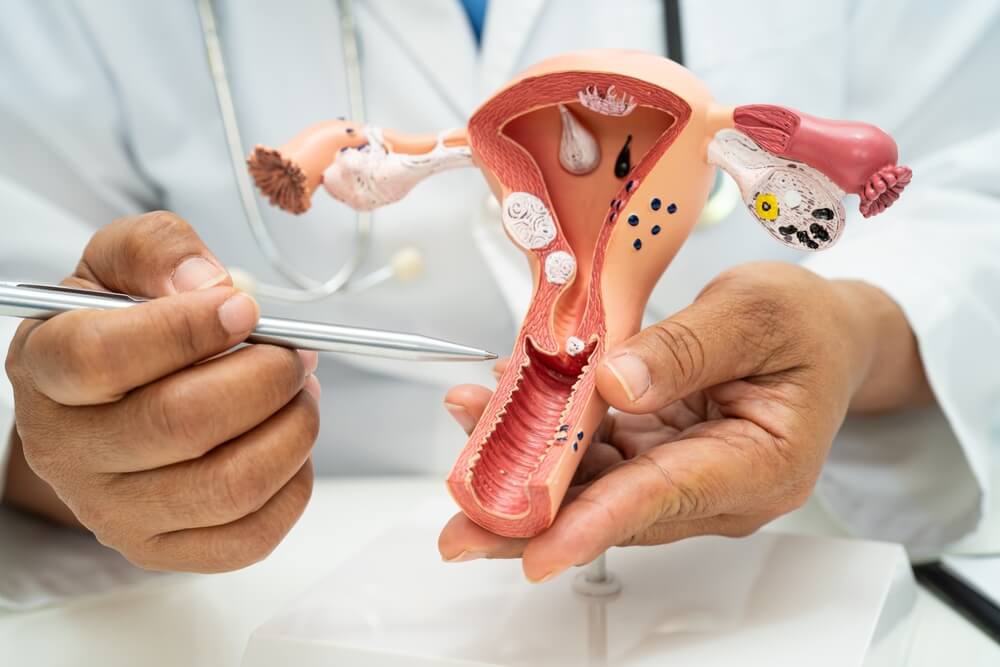
Uterine fibroids are noncancerous growths that develop within the uterus, usually in the muscular wall or along the uterine wall. These growths form from smooth muscular tissue and can appear as a single fibroid or as multiple fibroids throughout the uterine cavity.
Uterine fibroids are one of the most common reasons the uterus grows beyond its normal size, leading to severe symptoms. Fibroid growth is closely linked to changes in hormone levels, especially estrogen levels, which is why they often develop during reproductive years and may begin to change or stabilize as estrogen levels shift over time.
Their size, number, and location inside the uterus can vary widely. To see how this condition may be affecting you, it helps to take a closer look at the symptoms they cause and typical treatment paths.
Symptoms
Uterine fibroids can show up in different ways depending on their size, number, and where they sit within the uterus. Some may notice only mild changes, while others experience symptoms that drastically affect their comfort and daily routine. As the uterus grows or becomes larger than its normal size, these symptoms can become harder to ignore.
Symptoms can include:
- Heavy menstrual bleeding
- Heavy periods
- Abnormal uterine bleeding
- Menstrual bleeding that lasts longer than usual
- Pelvic pain
- Pelvic pressure
- Painful periods
- Frequent urination
- Bloating or fullness in the lower abdomen
- Lower back discomfort
- Pain during sex
Treatment Options
If you have been diagnosed with uterine fibroids, it is normal to wonder what the best treatment looks like for your body and your lifestyle. The right approach depends on the underlying cause, your symptoms, and how much the uterus grows beyond its normal size. Some options focus on managing symptoms, while others work to shrink or remove fibroids entirely.
From lifestyle changes to advanced procedures, there are several ways to treat this condition effectively:
- Healthy lifestyle changes: Maintaining a healthy weight and balanced habits can support stable hormone levels, which may help slow fibroid growth and ease related symptoms.
- Hormonal medications: Treatments like gonadotropin-releasing hormone agonist pills, progestin-releasing IUDs, or injections help lower estrogen levels, which can help gradually shrink fibroids and reduce heavy menstrual bleeding.
- Non-hormonal medications: Options such as nonsteroidal anti-inflammatory drugs (NSAIDs) and tranexamic acid can reduce menstrual bleeding and help relieve pain, but they do not remove fibroids.
- Uterine artery embolization (UAE): A minimally invasive option that delivers a solution through a thin catheter inserted into the wrist to block the blood supply to fibroids, causing them to shrink and improving heavy bleeding and pelvic pressure. This procedure can treat multiple fibroids and large fibroids, doesn’t require general anesthesia, and allows patients to return home quickly and resume normal activity quickly.
- MRI-guided focused ultrasound: A noninvasive outpatient treatment that uses magnetic resonance imaging to target small areas within fibroids and apply focused ultrasound energy to destroy tissue, though it is often limited to small fibroids and may not be widely covered by insurance.
- Myomectomy: An invasive surgical procedure that removes uterine fibroids while keeping the uterus intact.
- Hysterectomy: A major surgery that removes the uterus, which permanently eliminates fibroids and prevents recurrence. It is the only permanent solution to removing and treating uterine fibroids.
The Connection Between an Enlarged Uterus and Fibroids
An enlarged uterus and uterine fibroids are closely connected because fibroids are one of the most common reasons the uterus grows beyond its normal size. Uterine fibroids develop within the uterine wall or muscular wall of the uterus, and as they increase in size or number, they take up space inside the uterine cavity. This leads to uterine enlargement, which can make the uterus larger and heavier than usual. In some cases, even a single fibroid can cause noticeable changes, but multiple fibroids or large fibroids are more likely to significantly impact the size and shape of the uterus.
It is important to understand that while uterine fibroids share many symptoms and are a leading cause of uterine enlargement, they are not the sole cause. Other medical conditions, such as endometrial hyperplasia, adenomyosis belly, or even uterine cancer, including endometrial cancer, can also cause an enlarged uterus.
Identifying the exact underlying cause through imaging tests and a pelvic exam with a specialist is key. Once you know what is driving the enlarged uterus, it becomes much easier to choose the right path forward and find a treatment that addresses the problem.
Getting Real Answers About Your Enlarged Uterus and What to Do Next
If you have been told you may have an enlarged uterus, it is completely normal to have questions and feel concerned. It is important to remember that an enlarged uterus is not the final answer. It is a signal. No matter the cause, understanding what is happening inside your uterus is the first step toward real relief and a better quality of life.
You do not have to keep managing symptoms on your own without a clear plan. With the right steps, you can uncover the underlying cause and move forward with confidence.
At VIP Fibroid Center, we take the time to understand your symptoms, explain what is causing your enlarged uterus, and guide you toward minimally invasive options that fit your life. With advanced care and a personalized approach, we focus on helping you feel better, without rushing into major surgery.
Contact us today to schedule your consultation and take the next step toward clarity, relief, and lasting peace of mind.